
If you have lived through your first summer in Shanghai or your first spring in Shenzhen, you know the smell: towels that never quite dry, shirts that feel damp straight out of the wardrobe, and small grey spots on a coat you put away in perfect condition. Humidity in much of China regularly sits above 80%, and clothes pay the price. Here is how to stay ahead of it.
When humidity hits hardest
- Plum-rain season (梅雨, méiyǔ): roughly mid-June to mid-July along the Yangtze, including Shanghai, Hangzhou, Suzhou and Nanjing. Weeks of warm drizzle with almost no drying weather.
- Huinantian (回南天, huínántiān): late winter and spring in Guangdong and the south, including Shenzhen, Guangzhou and Xiamen. Warm, wet air meets cold walls and floors, and everything indoors starts to sweat.
- Summer in the south: hot and humid from May to October, so mildew can grow on anything left damp for a day or two.
Mildew needs three things: moisture, warmth and something to feed on, such as sweat, skin oils or food traces. Take away any one of them and clothes stay fresh.
Six ways to keep clothes fresh
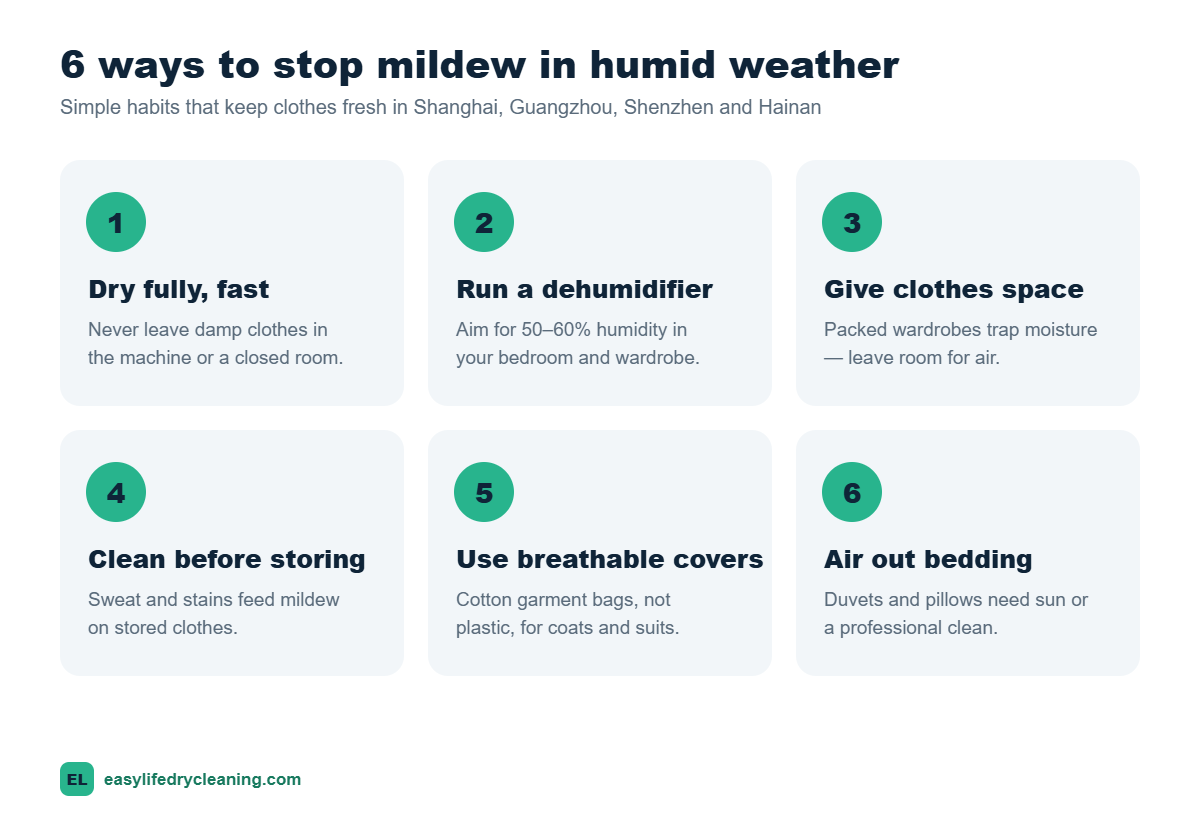
- Never leave wet laundry sitting. Take it out of the machine straight away. Damp clothes left for a few hours in a warm flat start to smell.
- Dry indoors with help. On rainy days, hang clothes with space between them and run a dehumidifier or the air conditioner on dry mode (除湿) in the same room. A fan speeds things up.
- Run a dehumidifier in the bedroom. Aim for under 60% humidity. In plum-rain season, a mid-size dehumidifier can pull litres of water out of the air each day.
- Keep the wardrobe breathing. Do not pack it full, leave the doors open for an hour on dry days and use moisture absorbers (除湿盒) or bamboo charcoal bags on the shelves. Empty and replace them regularly.
- Clean before you store. Sweat and food invisible to you are a feast for mould and moths. Wash or dry clean everything before it goes away for the season.
- Use breathable storage. Store coats in cotton garment bags, not the plastic covers they came back in. Plastic traps moisture against the fabric.
Removing mildew at home
Caught early, light mildew on washable cotton and synthetics often comes out at home:
- Take the item outside and brush off loose spores, so you do not spread them indoors.
- Soak it for 30–60 minutes in a mix of one part white vinegar to four parts cool water.
- Wash on the warmest setting the care label allows.
- Dry it fully, ideally in direct sunlight, which helps kill remaining spores and fade marks.
Important: never mix vinegar and bleach, or bleach and any other cleaner. It releases toxic chlorine gas. If you use oxygen bleach on whites, use it on its own and rinse well.
When to use a professional cleaner
Some items are not worth the risk of home treatment. Send these to a dry cleaner:
- Wool coats, suits and anything labelled dry clean only.
- Silk, cashmere and delicate dresses.
- Leather, suede and handbags, which can stain or stiffen with water.
- Duvets, pillows and curtains that are too big to dry properly in a flat. Our bedding and curtain cleaning dries them fully before they come back.
- Mildew that has left a stain or smell after one home wash.
For everyday clothes during the wettest weeks, a wash, dry and fold service is the easiest fix: everything comes back fully machine-dried and folded, so nothing sits damp in your flat. Garments that need extra care go through our dry cleaning and laundry service.
Storing winter coats over summer
| Do | Avoid |
|---|---|
| Dry clean coats and wool before storing | Storing worn clothes “to clean later” |
| Cotton garment bags | Plastic dry-cleaning covers |
| Moisture absorbers in the wardrobe | Wardrobes against cold outside walls |
| Check stored items once a month | Leaving them untouched until November |
Let us do the drying
We collect from your home, clean and fully dry everything, and bring it back pressed or folded. It is the simplest way through plum-rain season.